Reimagining The Community Table
Partnership and Expansion in a Time of Isolation
When The Community Table’s free dinners weren’t reaching rural and underserved community members, it became clear that new solutions were needed. At the same time, the disconnect between the local university and the surrounding community limited opportunities for collaboration and support.

Incorporating W&L students into The Community Table operations “Built a bridge between two worlds.”
The Community Table exists to address food insecurity through something profoundly human: sharing meals together. Our dining room model was intentionally designed to remove stigma, no income requirements, no barriers, no labels. Everyone sits at the same table.When the pandemic hit, the very thing that defined us — gathering — became impossible.
Most of our volunteers were older and medically vulnerable. Our kitchen operations halted overnight. The dining room closed. Our funding relied entirely on grants and community donations during an uncertain economic moment. We faced a fundamental question: How do you preserve belonging when you cannot gather?
Rather than pause operations, we redesigned them.
I focused on listening to community needs, building partnerships, and expanding TCT’s services to create a stronger, more connected network of care.
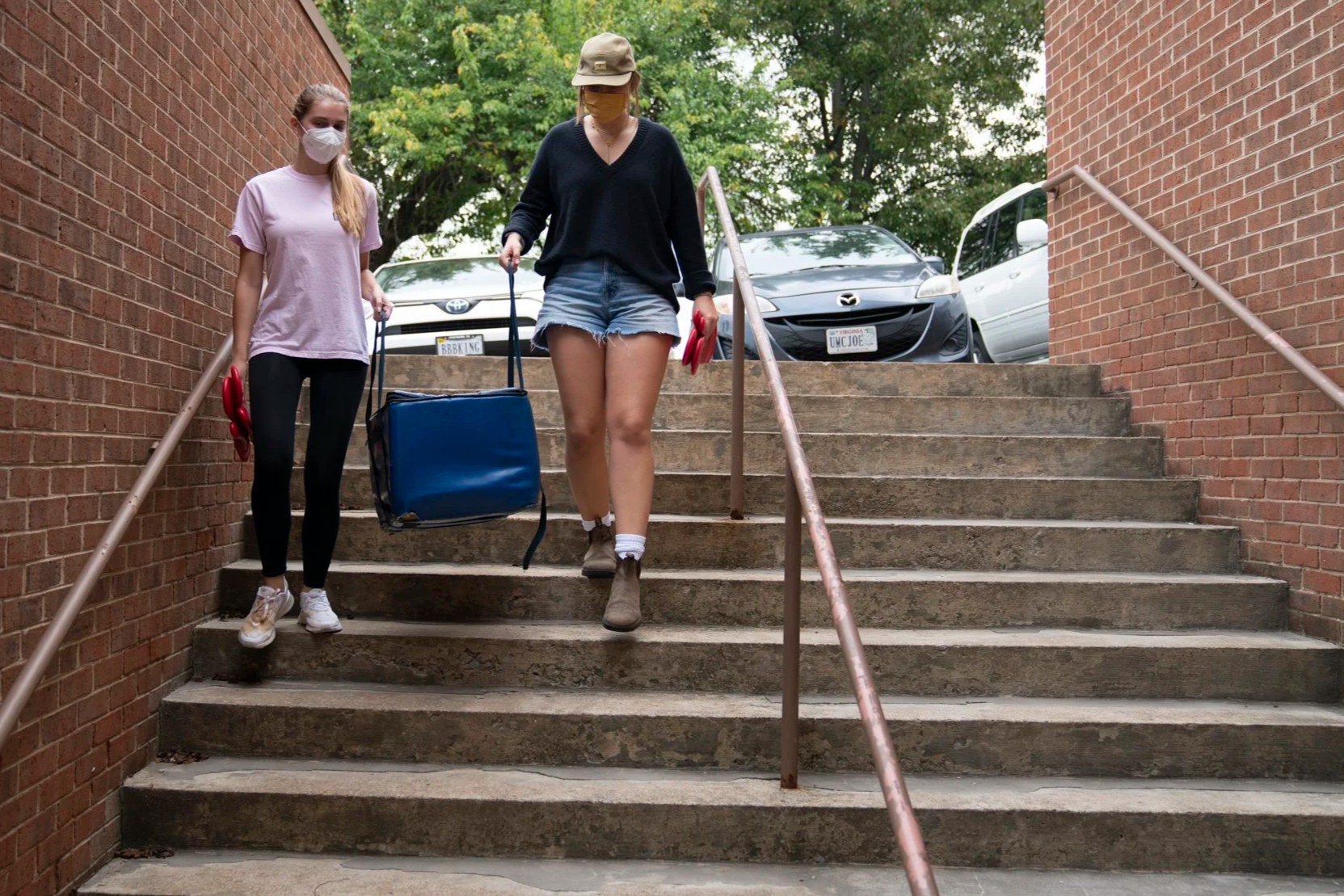
Expanding College Partnerships: W&L Students prepared, delivered, and helped serve meals as part of their volunteer corps.
Creating Collaborative Partnerships
Because volunteers could not safely cook in our kitchen, we partnered with local restaurants and caterers — businesses themselves struggling during shutdowns.
Partnered with Washington and Lee University’s Office of Community-Based Learning and Campus Kitchen at W&L to build stronger connections between students and the community through volunteering while Campus Kitchen was able to prepare, deliver and serve meals.
Invited students to join TCT’s board, bringing fresh ideas while fostering mutual understanding and respect. These partnerships broke down social barriers and strengthened trust, as one community leader described it: “This built a bridge between two worlds.”
Many rural families could not easily travel to Lexington for pickup. Instead of accepting that limitation, we partnered with the Rockbridge Area Transit System (RATS) to provide free transportation to and from rural communities. This extended our reach beyond city limits into the broader county, permanently shifting our geographic footprint.
Expanding Programs to Improve Access
Launched Midweek Hot Lunches, prepared by student volunteers to fill gaps.
We collaborated with Fairfield Presbyterian during its weekly “Free Market,” integrating Frozen Packaged Meals into a larger ecosystem of food access, local farmers, and pantry distribution for rural families who couldn’t access in-person services.
Implementing a curbside pickup model where families could receive as many meals needed per household, no questions asked.
The response was immediate and overwhelming. Donations remained strong despite economic strain, reinforcing that the community believed in the mission. And we discovered something unexpected: For many families, takeout was not just a temporary fix, it was a preferred and more accessible option.

We discovered something unexpected: For many families, takeout was not just a temporary fix, it was a preferred and more accessible option.
The hardest decisions were not operational, they were philosophical.
The dining room was foundational to our identity. Some board members felt that continuing curbside service after reopening diluted our mission. I took a different view. Our bylaws were designed to seek and respond to emerging community needs. The takeaway model had revealed hidden barriers:
Families uncomfortable dining publicly
Health-compromised individuals
Caregivers balancing time and privacy
Working parents needing flexibility
For many, takeout was the only viable access point. I advocated for maintaining both models: dining room and takeout. Not everyone agreed. Board transitions followed. Conversations were difficult. But the mission demanded expansion, not contraction. Community does not require proximity. It requires access.
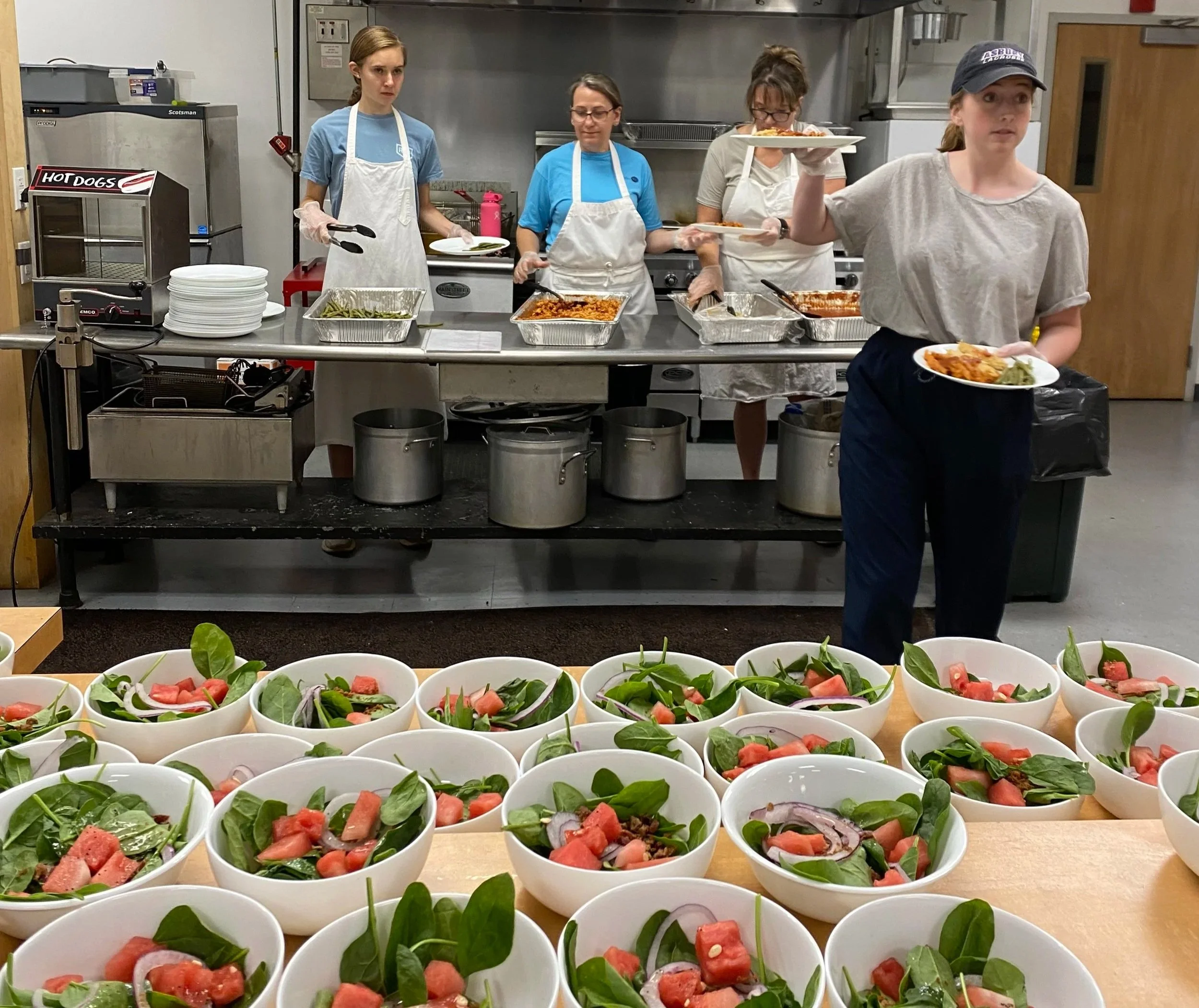
One challenge emerged clearly: higher-income residents hesitated to accept meals, fearing they were taking resources from neighbors in need. We reframed the narrative with the inclusive campaign line: “Dinner’s on us.”
The message was simple and intentional: this is not charity, it is community. And it worked!
Strengthening Infrastructure & Sustainability
During this period, we:
Secured the largest grant in organizational history
Invested in commercial-grade kitchen upgrades (refrigeration, stove, dishwasher, prep counters)
Transitioned our chef from volunteer to paid employee
Added a part-time paid Volunteer Coordinator
Formalized operational SOPs for safety, logistics, and volunteer management
Clarified brand messaging to reinforce inclusivity
One messaging challenge emerged clearly: higher-income residents hesitated to accept meals, fearing they were taking resources from neighbors in need. We reframed the narrative with the inclusive campaign line: “Dinner’s on us.” The message was simple and intentional: this is not charity, it is community. And it worked!

Our new meal location in Glasgow at the under utilized community center become one of the most popular locations!
What This Leadership Required
Rapid systems design under uncertainty
Partnership development across sectors
Governance navigation and board evolution
Change management amid philosophical tension
Brand clarification and messaging refinement
Infrastructure investment strategy
Volunteer culture stewardship
Most importantly, it required protecting the dignity embedded in the mission. We were never just feeding people, we were reinforcing belonging.