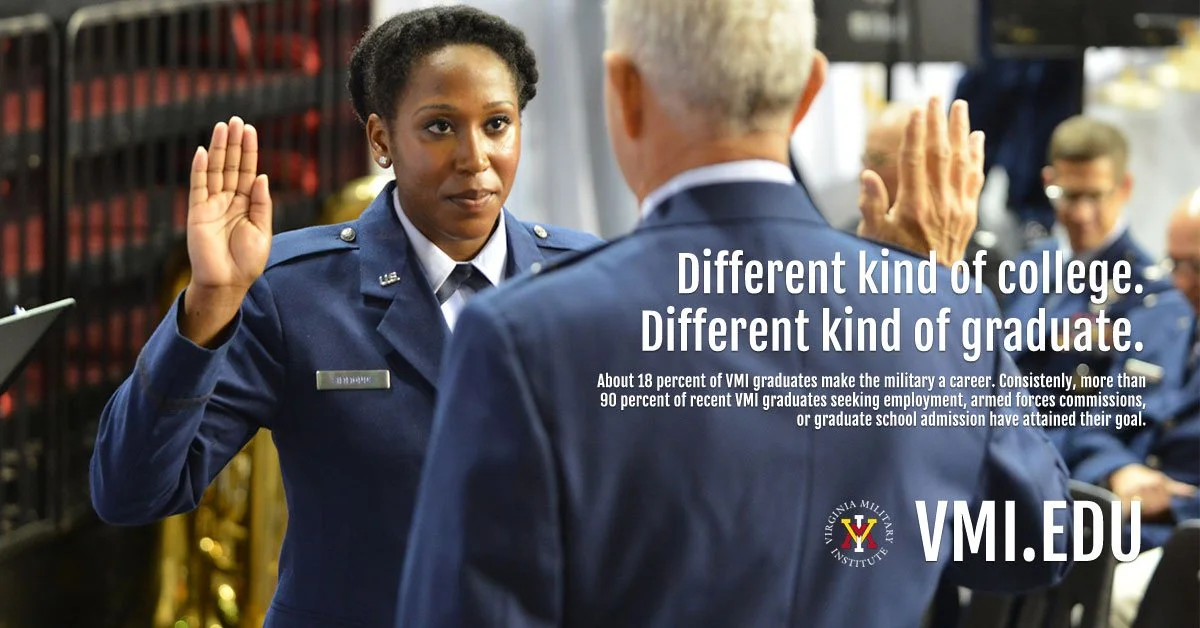
Designing for Belonging
Virginia Military Institute | 2012-2019
Director of Digital Strategy and Brand
A five-year, cross-channel campaign to grow women's enrollment at a tradition-bound military institution.

VMI’s culture is structured, demanding, and historically male.
Public conversations around gender equity, leadership representation, and campus climate were visible. Female cadets reported pressure to prove they were not symbolic appointments. Prospective families had practical and emotional questions about belonging, standards, and support. Generic inclusion language would not suffice.
The Context
VMI began admitting women in 1997, following the U.S. Supreme Court's decision in United States v. Virginia. Nearly three decades later, women represented roughly 14% of the Corps of Cadets.
Growing that number required credibility within a tradition-bound institution that was still navigating its own cultural evolution. Prospective female cadets and their families were asking hard, specific questions but the institution's existing marketing had no real answers for them.
My charge was to translate institutional rigor into messaging that spoke directly to those questions, without diluting VMI's identity or manufacturing a version of the school that was not real.
The Messaging
The primary recruitment piece was structured around action-oriented language that reinforced agency. It positioned VMI as a place where women could shape their own path.
Earn Your Place: Standards are the same. The opportunity is yours to take.
Train to Lead: Leadership at VMI is not given. It is developed and earned.
Discover Your Strength: Physical, academic, and personal. The training develops all three.
Ensure Your Future: An outcomes-focused case for a demanding education.
A Cornerstone Print Piece
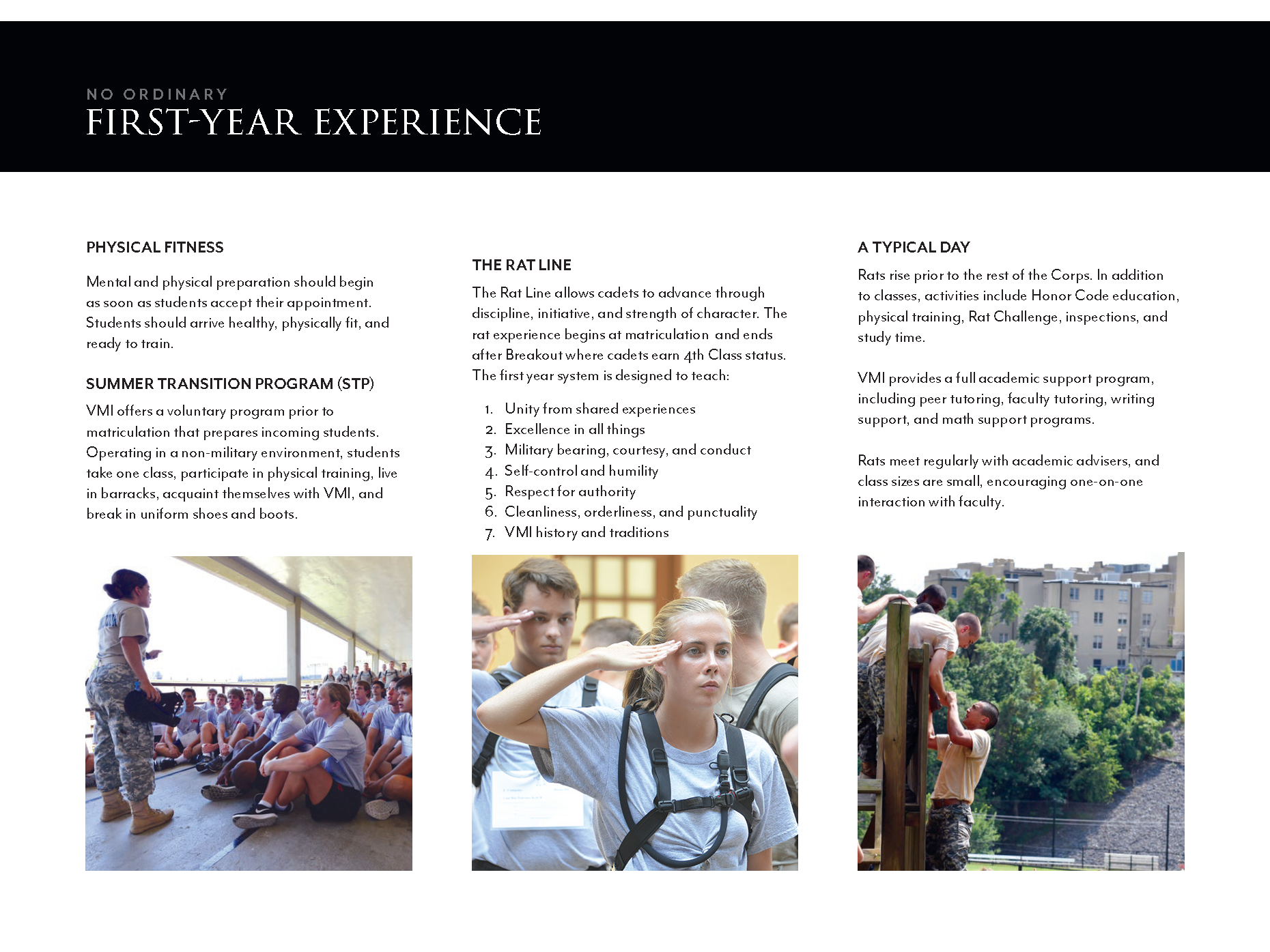
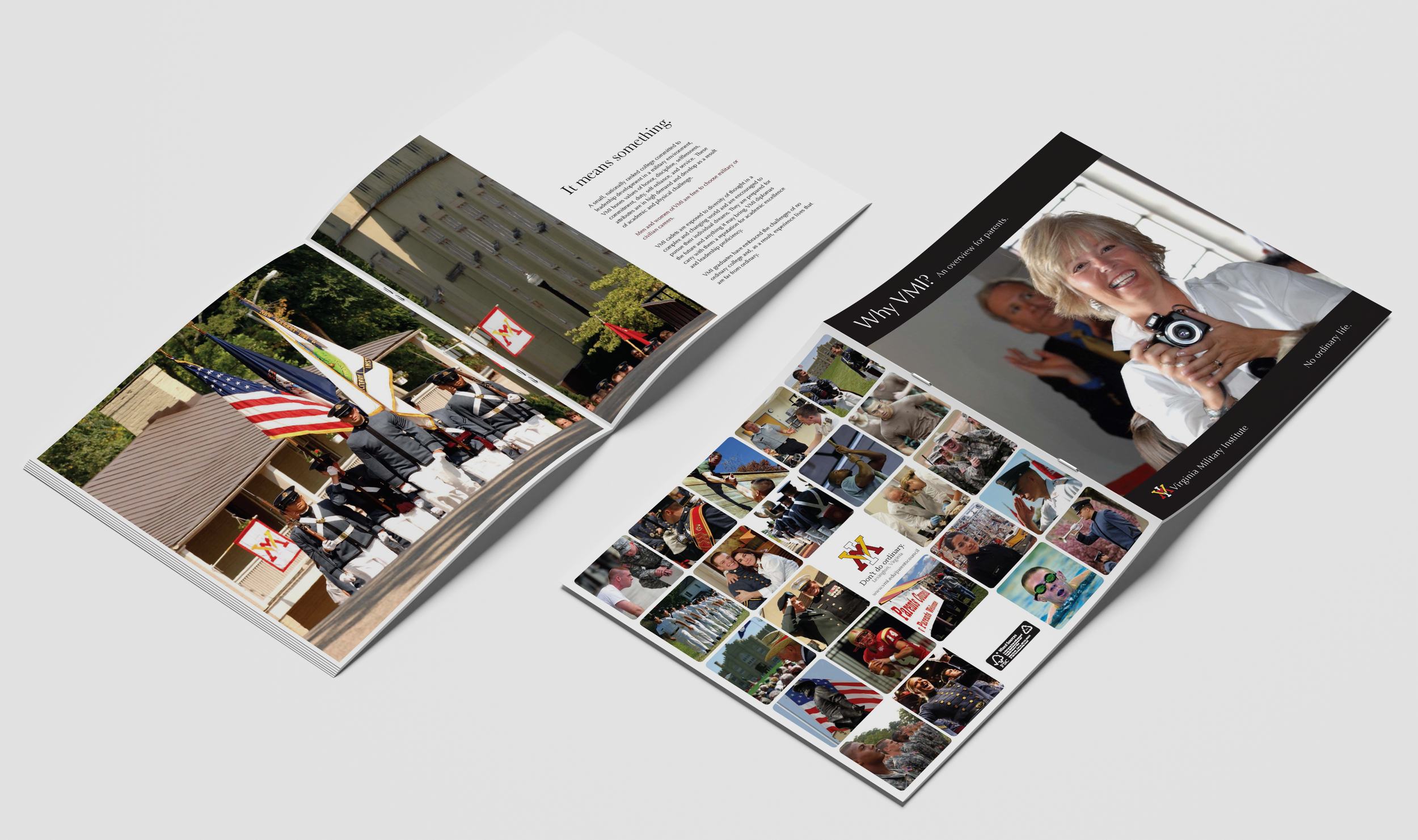
The centerpiece was a long-form narrative mailer built around the action-oriented pillars. Every spread paired bold imagery with direct language. The design reinforced the message: this is a real place, with real standards, and you can belong here.
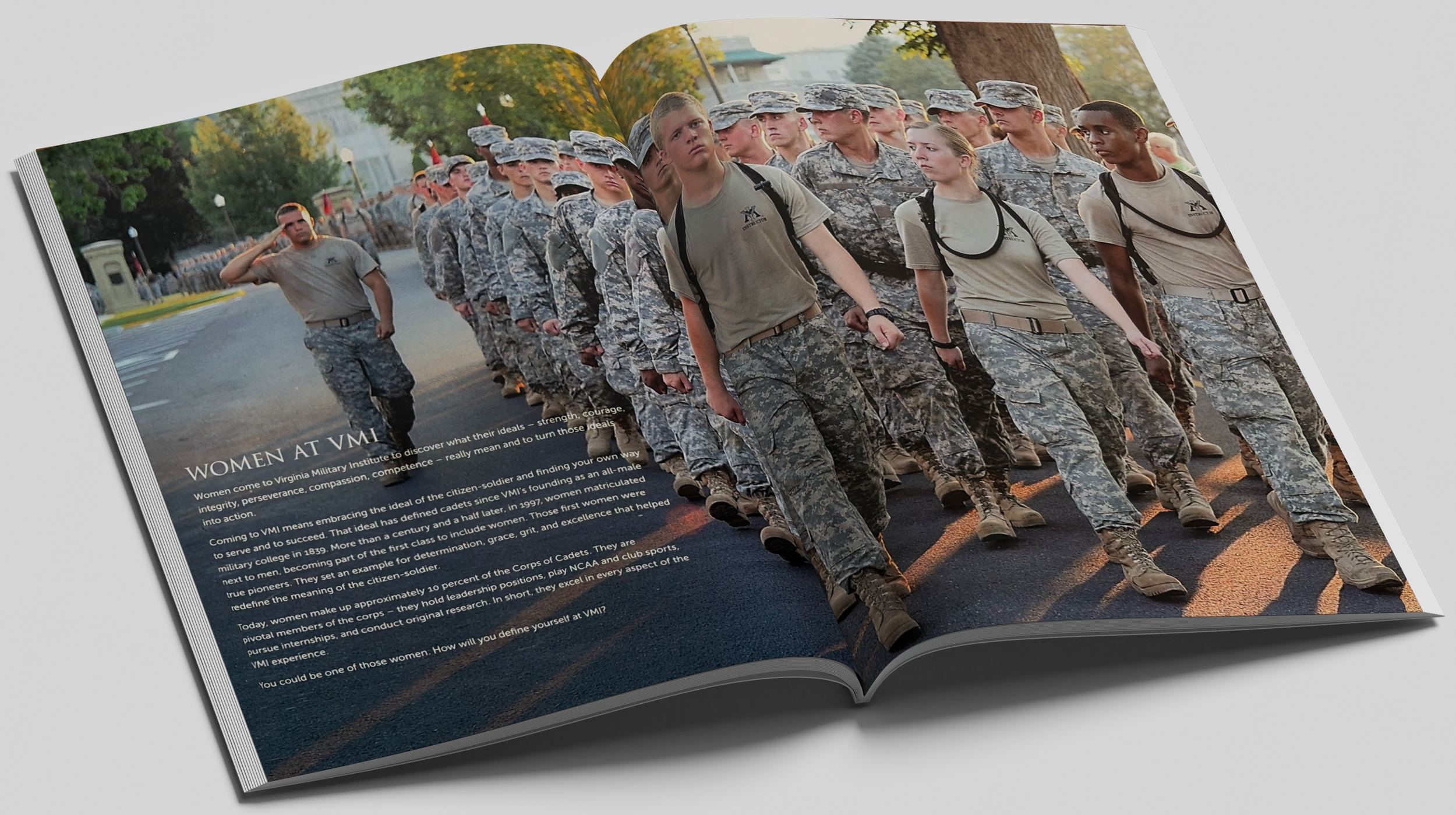
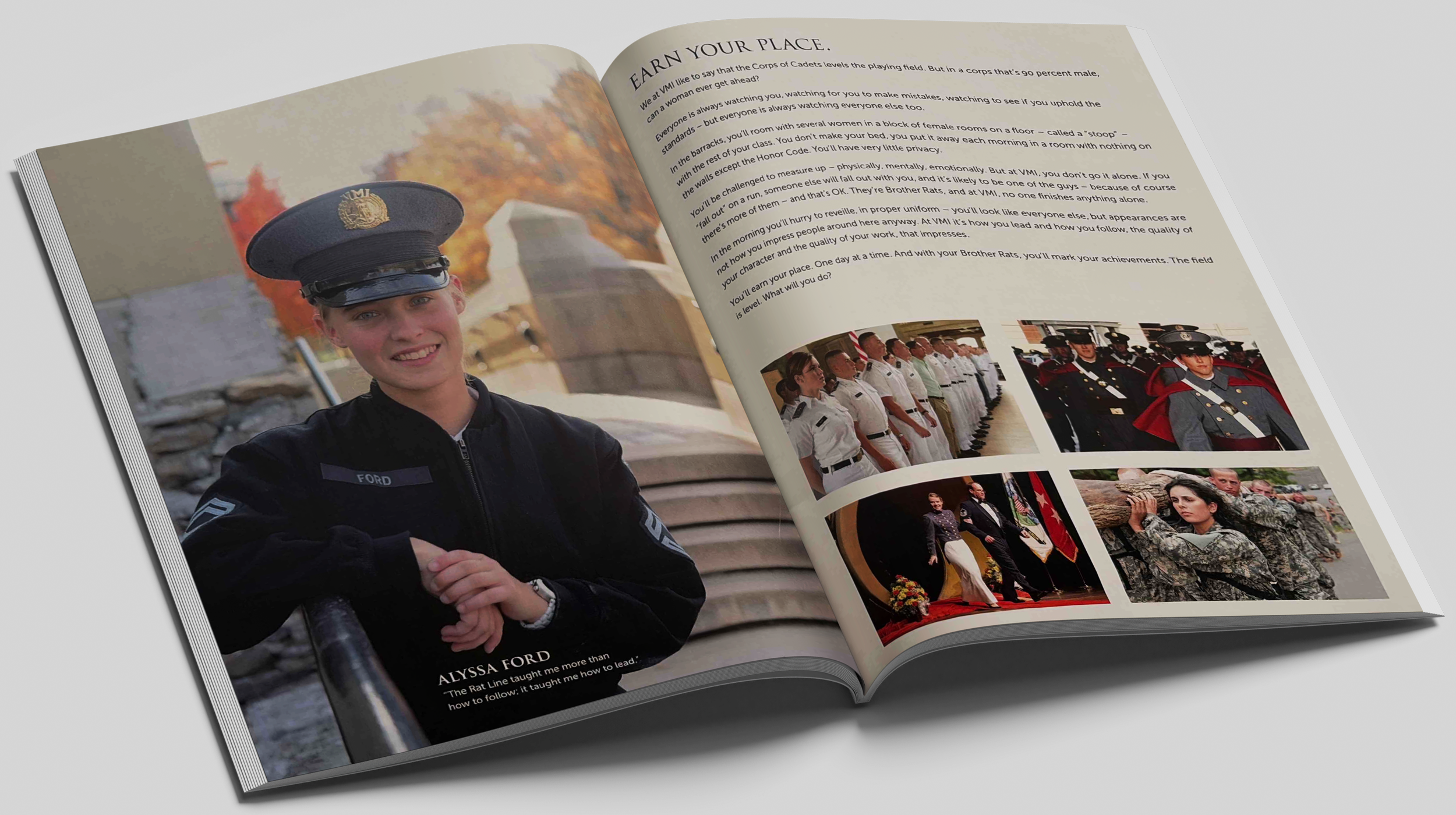
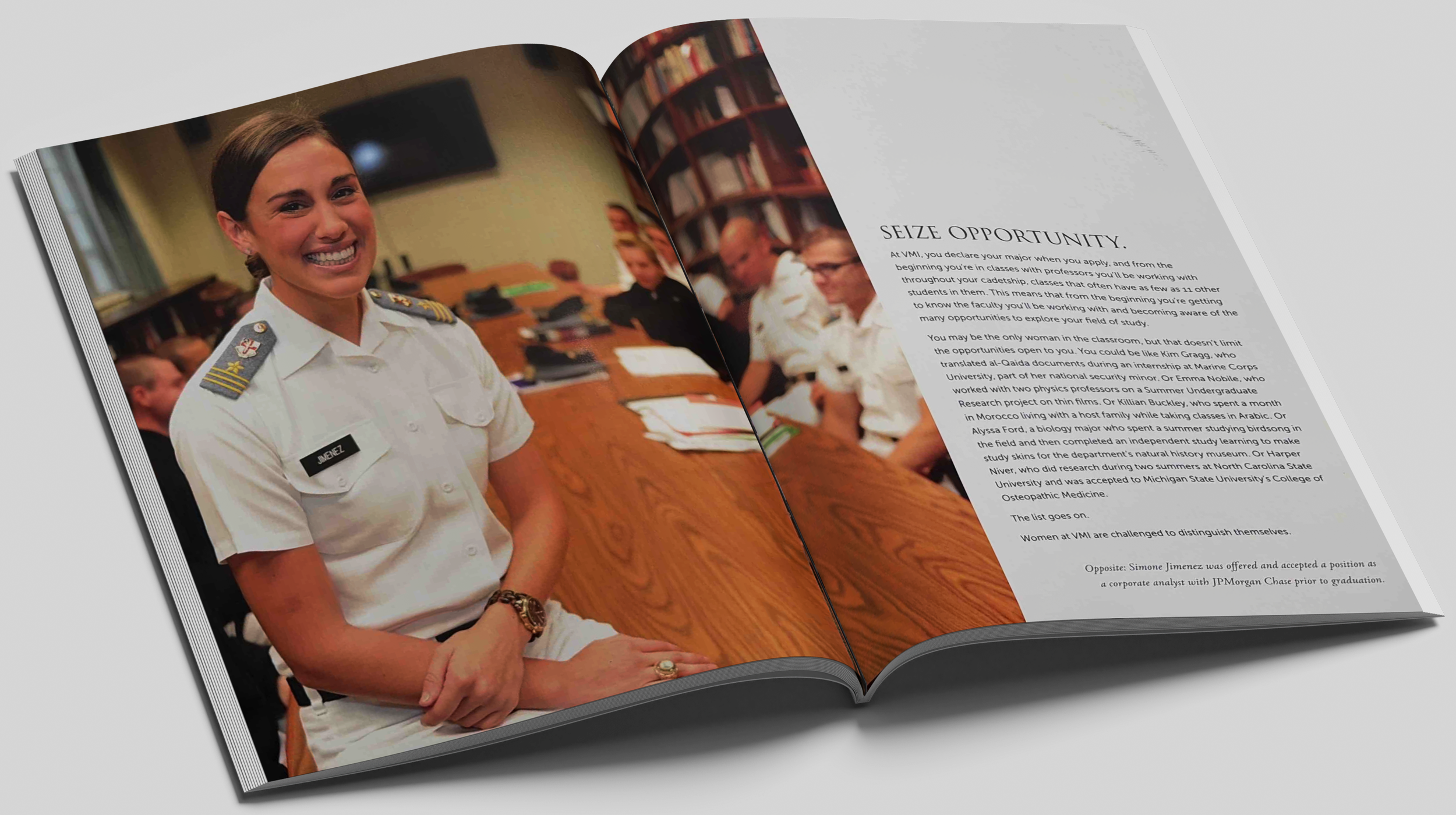
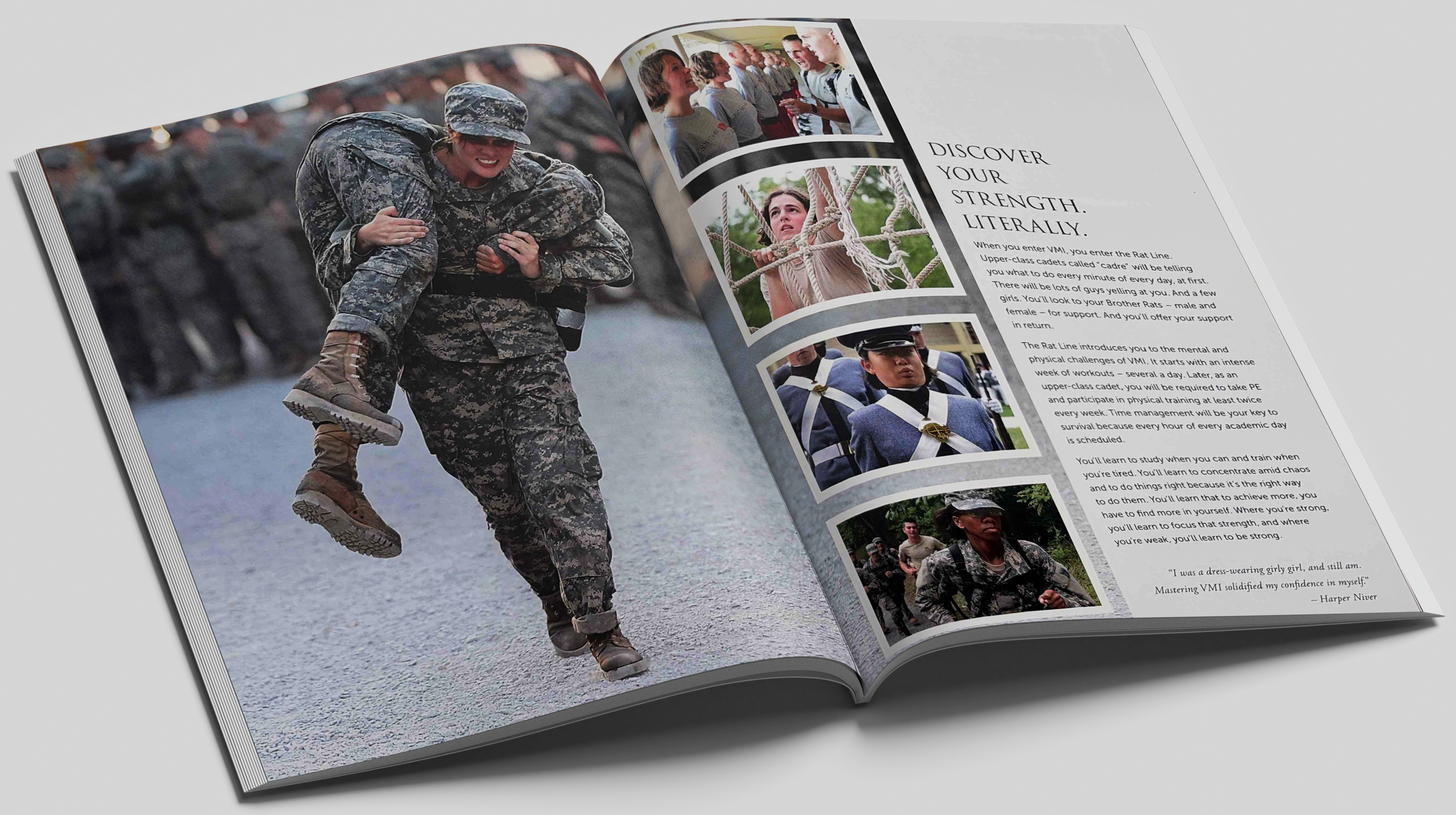
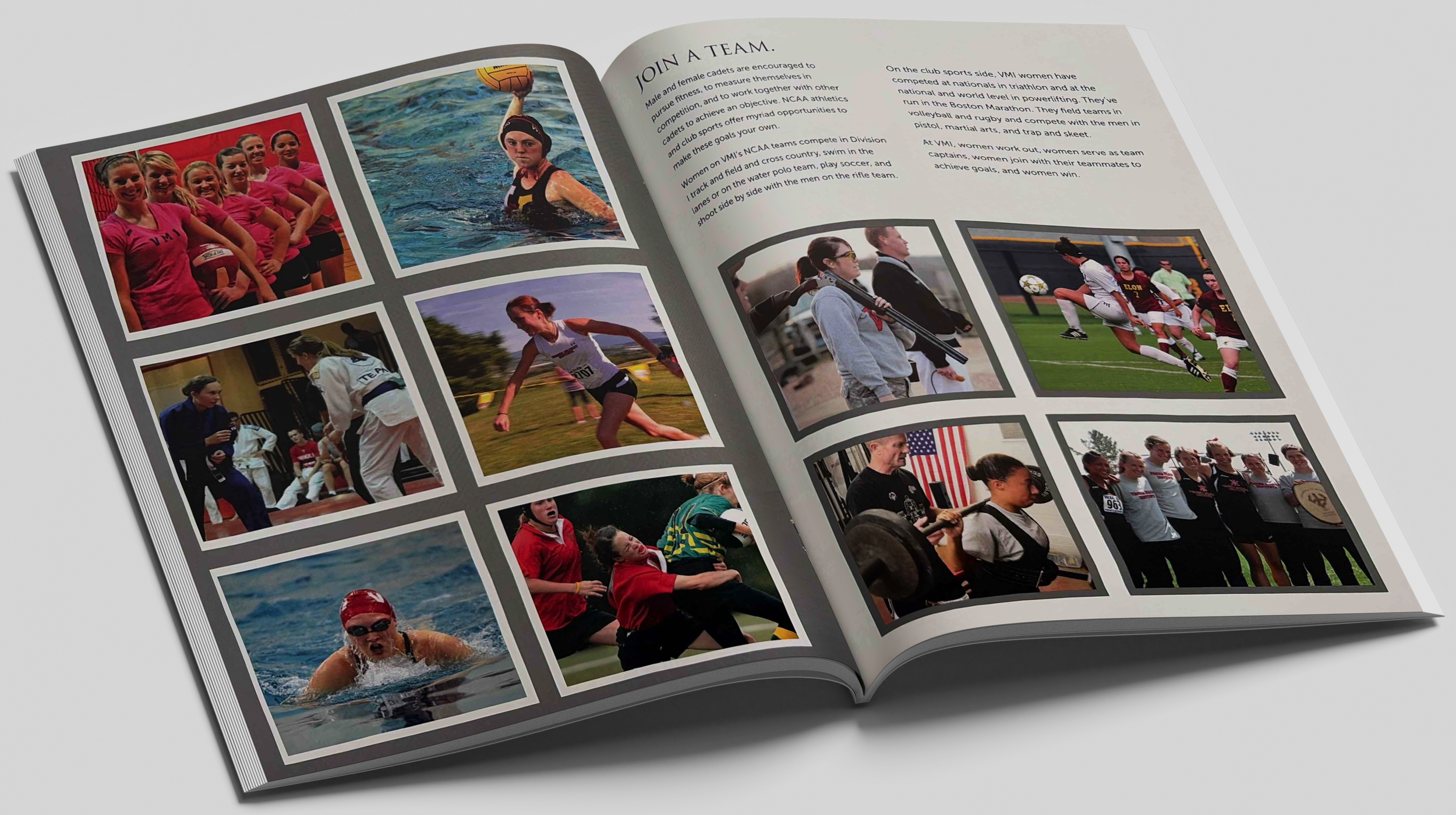
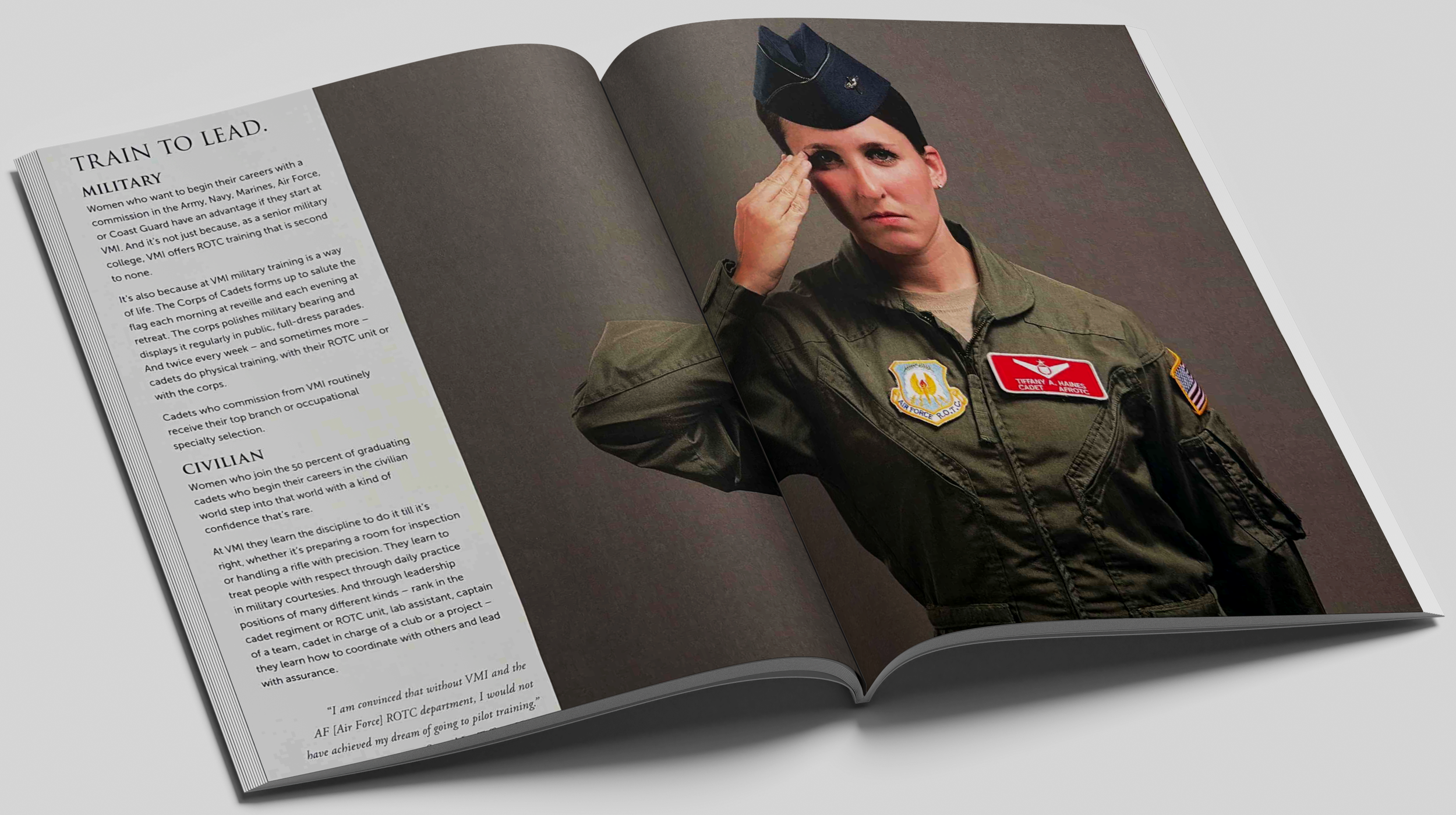
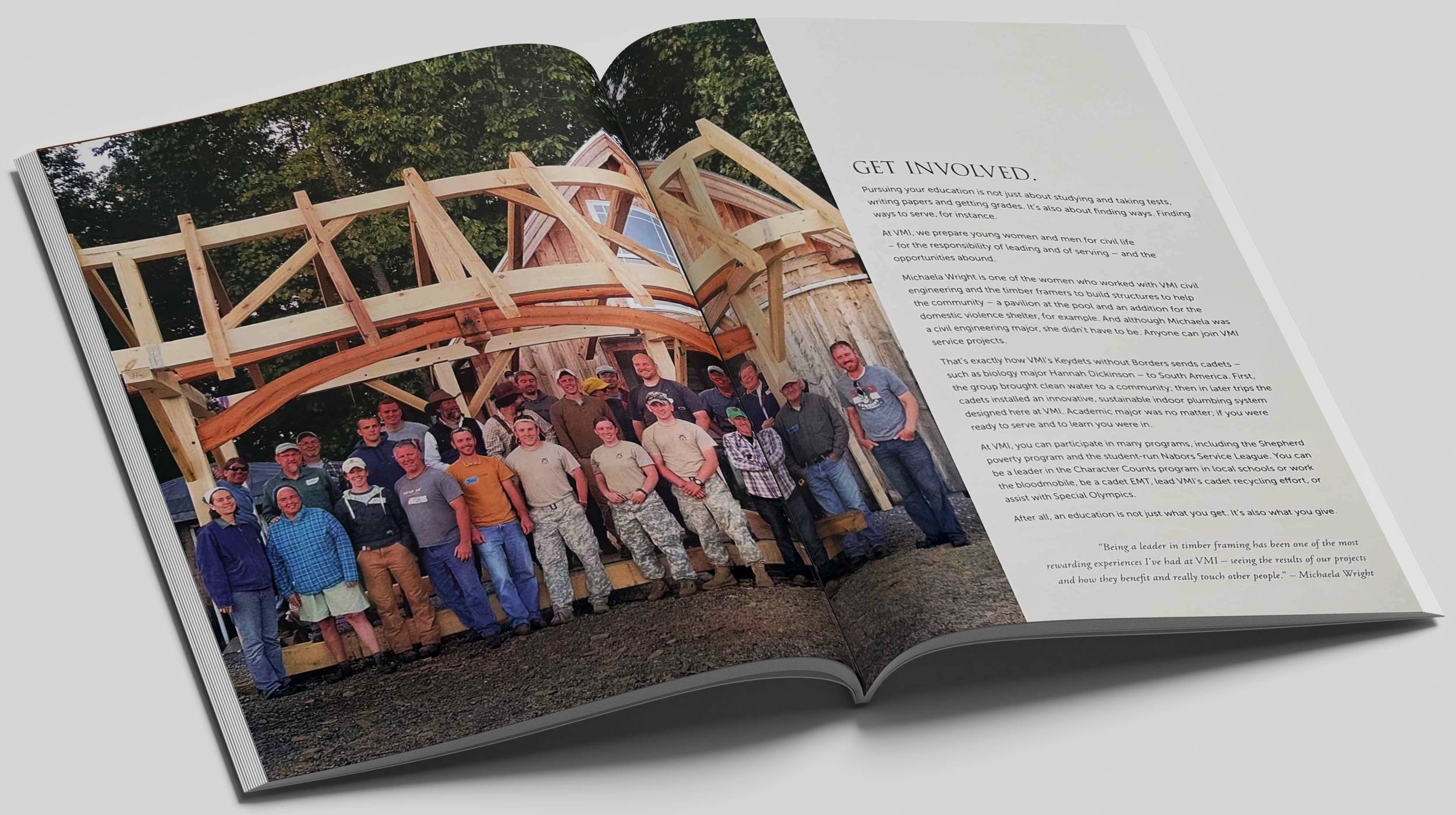
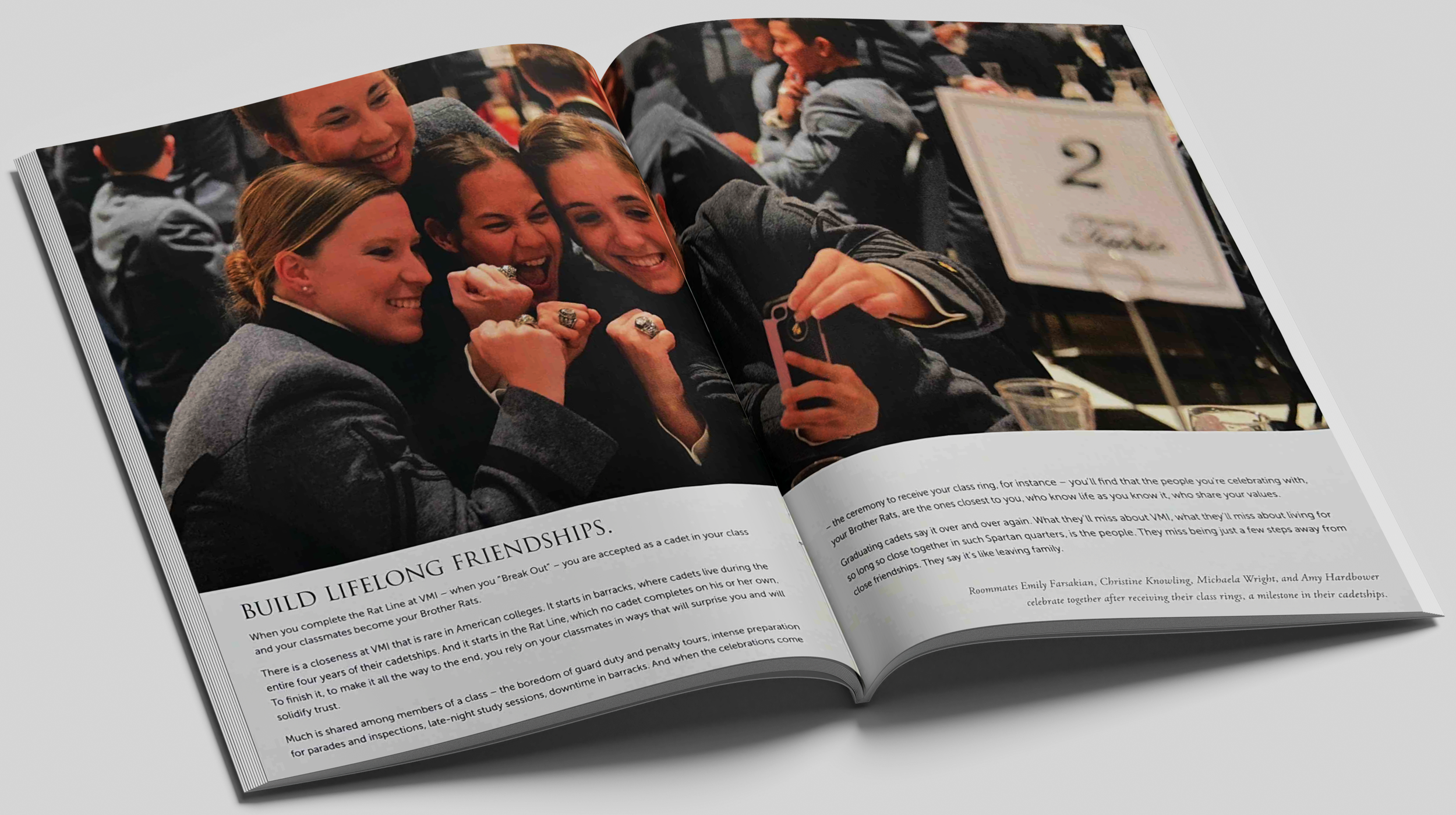
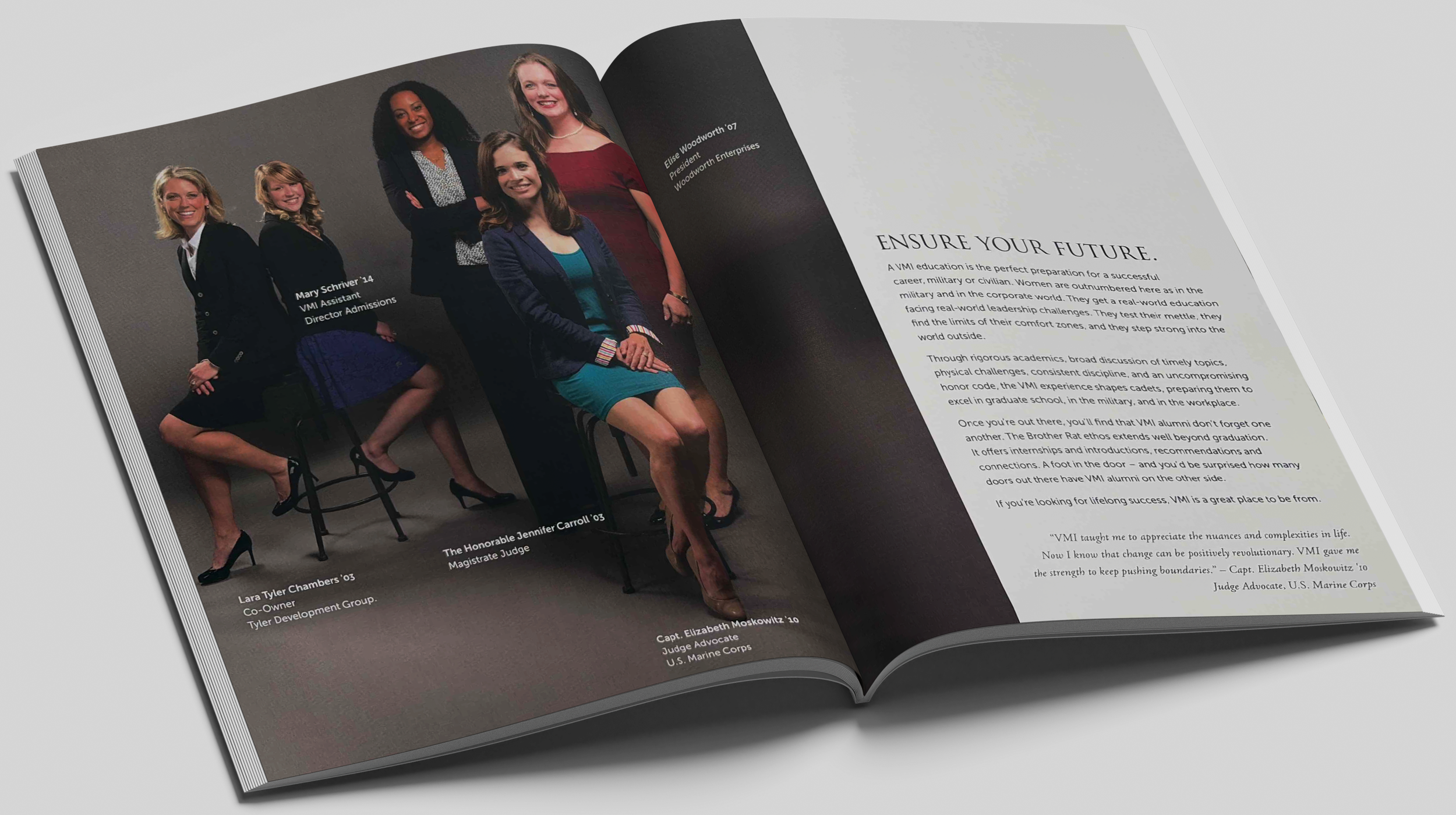
Selected spreads from the Women at VMI recruitment mailer. The language is intentionally strong. The imagery is drawn from real cadets. Nothing is posed to look aspirational. It is aspirational because it is true.
Define Yourself: A Cross-Channel Campaign
To move beyond institutional claims, the campaign was built around individual female cadets. The structure reclaimed strength-based language within VMI's own culture and gave prospective students someone real to see themselves in.
Each cadet profile paired a single defining noun (Strength. Endurance. Courage. Intellect. Purpose.) with a bold, authentic image, a dictionary-style definition, the cadet's name and class year, a short excerpt in her own voice, her academic major and leadership roles, and her future ambitions.
These profiles ran across all channels, creating visual and narrative consistency throughout the entire prospect journey.
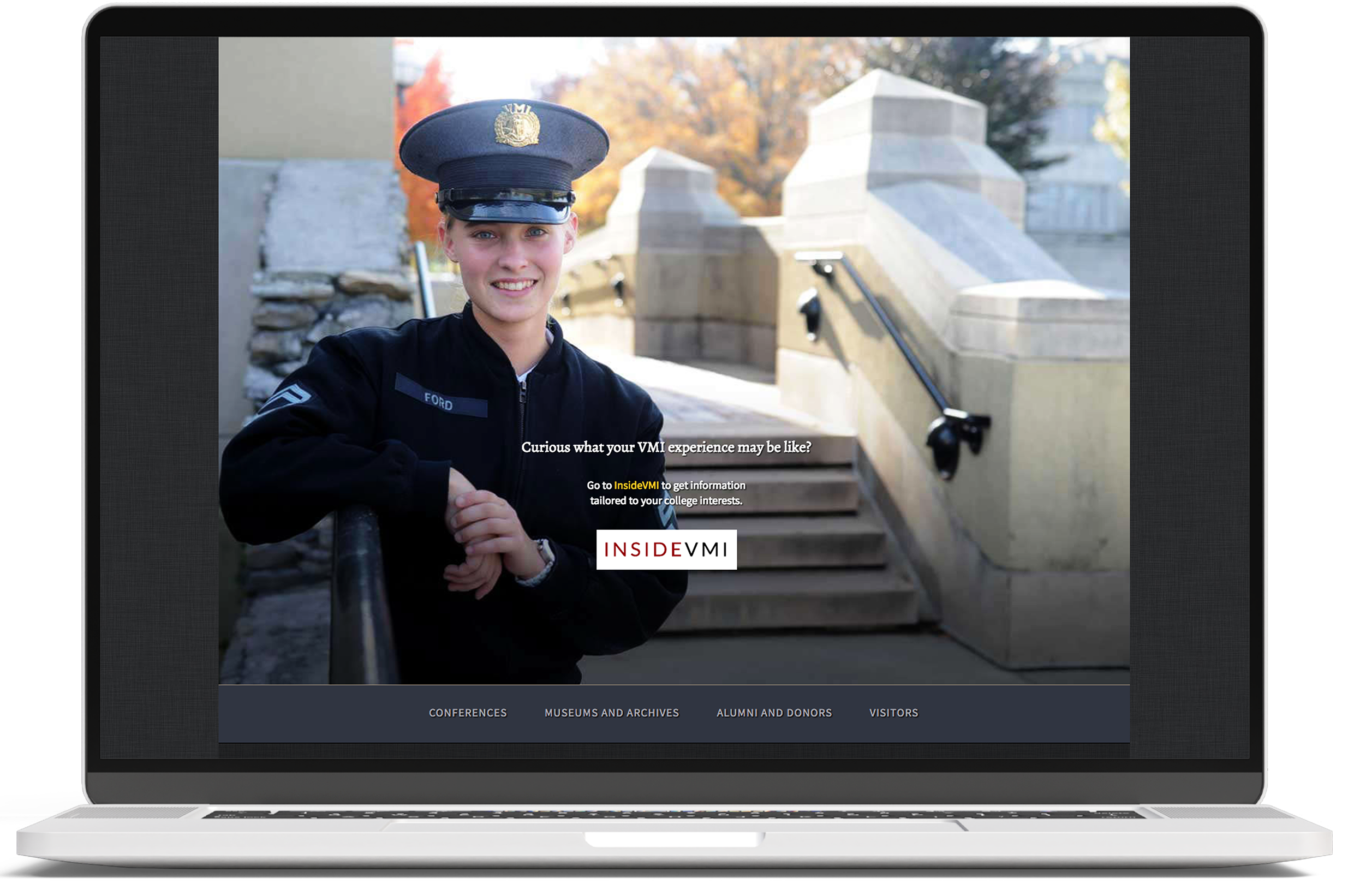
The digital experience built for prospective female cadets, parents, and families — specific enough to address real questions, strong enough to honor the institution.